 Top Trending
A Five-Milliliter Packet With Five Botanical Lines, One of Them Tested in 21 People
Liposomal Brain Complex is a daily packet of sweet almond-and-coconut paste from Cymbiotika of San Diego. I read each of its five lines beside its trial, the reviews including the one-star ones, and the refund page.

This is a paid advertisement. Sponsored by Cymbiotika, LLC.
Gordon Ashby is the pen name of this desk.
The customers quoted on this page are real; their reviews are public on the seller's product page and were read there on September 9, 2026.
I haven't met them and know nothing about them beyond what they wrote.
The small photos beside their reviews are illustrations, not the reviewers.
Everything about the packet, from the five lines on the panel to the refund terms, comes from the seller's own label and pages, read the same day.
The packet is the size of a ketchup sachet from a diner, and it costs about two dollars.
That's the first thing to know, and the seller doesn't hide it: a box is a month, and a month is the price of a modest dinner out.
The second thing is that it isn't a capsule.
It's a spoonful of sweet paste, almond butter and coconut nectar and cassava syrup, with the five botanical lines mixed in and the word "liposomal" on the front.
And the third thing, the one this page is built on, is that the star ingredient has exactly one trial in people, and it had 21 of them in it.
So that's what this page is.
Five lines, five trials of very different sizes, one packet, one sweet spoonful, and at the end, a refund page that gives you sixty days but only once.
One five-milliliter packet a day, in the mouth or in the coffee. Every number on this page is for that packet.
Here's what the packet is.
Liposomal Brain Complex, from Cymbiotika, a company with its office in San Diego, California.
A box the seller calls a month's supply of small flat foil packets, each holding five milliliters, a teaspoon, of pale paste.
The panel, in the seller's order: rhodiola root extract, phosphatidylcholine from sunflower, bacopa extract, a standardized kanna extract called Zembrin, and huperzine A.
Then the paste itself: glycerin, water, organic almond butter, coconut nectar, cassava syrup, cocoa extract, sea salt, vanilla, pectin, vitamin E, a couple of thickeners, and a pinch of cinnamon, ginger, clove and cardamom.
Twenty calories.
Less than a gram of added sugar.
Thirty-five milligrams of sodium.
And, printed in bold at the bottom: contains almond and coconut.
I did what I always do.
I read the label before the listing.
I read the trials behind each line, at the doses they actually used, in people as old as I am when such trials exist.
I read the seller's page, which promises things about how you feel that this page won't repeat, because they aren't what you came here to read about and I can't stand behind them.
And I read the reviews, all thirty the page gave me, including the ones that hated the taste.
What I found is a well-labeled packet from a company with a street address and a phone number, five real lines, one at its trial dose from a trial of 21 people, three below their trials, one at a fraction of a dose that did nothing, and a refund that's generous once.
The Name That Was Right There a Second Ago
Let's start with you, not with the packet.
You know the moment I mean.
You're at the hardware store, and a man you've known for twenty years says hello.
You know his wife, his dog and the truck he drives, and his name simply isn't there.
It comes back in the parking lot, of course.
It always comes back in the parking lot.

Or you read a page of the paper, reach the bottom, and realize you'll have to read it again.
Not because it was hard, but because your mind was somewhere else the whole time.
Or you walk into the kitchen with great purpose and stand there.
You look at the fridge, the fridge looks at you, and neither of you knows why you came.
Sound familiar? Almost every man I know past sixty tells me the same three stories.
So is it something to worry about?
Not on its own, and this page isn't here to make you fret.
A name that comes back in the parking lot is a name your memory kept.
It just took the long way around.
The men I talk to aren't frightened by it.
They're annoyed by it, and they'd like the name to show up in the store instead of in the parking lot.
That's the whole ambition of this page: ordinary days, running a little more on time.
Nothing grander, and I'd be suspicious of anyone who sold you grander.
So what do most of us try first?
The same things I tried, and you've probably tried them too.
Coffee, Crosswords and Sticky Notes: Good Habits With a Ceiling
The first thing is coffee, and I'm not about to take it away from you.
A second cup gets you moving, and a man who's moving notices more.
But coffee doesn't file your names for you.
It turns the lights up in a house where you still have to find the right room.
The second is the crossword, or the jumble, or the word game your granddaughter put on your phone.
They're good company, and you do get better at them.
What you mostly get better at is the crossword.
The name at the hardware store is a different game.

The third is the sticky note.
On the fridge, on the dashboard, on the bathroom mirror.
Notes work, and I use them.
But a house covered in yellow squares is a house doing your remembering for you, and you'd rather it didn't have to.
Aren't the plain habits the real answer, though?
They're the foundation, and I'll say so plainly.
Walking, eating more like the Mediterranean table, seeing people and keeping your mind busy are all worth doing for their own sake.
In one three-year trial of 604 older adults, a group eating the MIND pattern and a comparison group on a sensible lighter diet both improved their thinking scores, with no real gap between them. [1]
Read that the honest way: eating sensibly and paying attention helped both groups.
There was no special menu, and there's no special packet either.
So the habits stay.
The question men ask me is smaller and more practical.
Is there one small thing I can add to the morning, on top of all that, that I'll actually keep doing?

That's where a packet like this one comes in, and it's why I read it so carefully.
Something you add every morning for months deserves a hard look at the label first.
What does the seller say the packet is for?
Focus and learning, in the everyday sense, plus a few feelings-words I'll leave on the seller's page.
That's the ground this page stays on.
Ordinary days, ordinary mornings, and the five lines printed on the back of the box.
A Foil Sachet, a Teaspoon of Paste, and a Panel With Five Lines
This is what's on the counter.
A slim box, and inside it a row of flat foil packets, each about the size of a diner's ketchup sachet.
You tear the corner off and squeeze the paste into your mouth, or onto a spoon, or into coffee, where it melts into something like a thin mocha.
The back of the box is the panel, and I'll read it to you in the seller's order, per packet:
Rhodiola rosea extract, root, 100 milligrams.
Phosphatidylcholine, from sunflower lecithin, 60 milligrams.
Bacopa monnieri extract, whole plant, 50 milligrams.
Sceletium tortuosum extract, aerial parts, the Zembrin brand, 25 milligrams.
Huperzine A, from Huperzia serrata, 50 micrograms.
Then the other ingredients, which are most of the packet's weight: glycerin, water, almond butter, coconut nectar, cassava syrup, cocoa extract, sea salt, vanilla, pectin, vitamin E, sodium alginate, calcium lactate, and the four spices.
Twenty calories, half a gram of fat, three grams of carbohydrate, less than a gram of sugar.
The directions: one packet, daily, and the seller says it's "great in the morning."
The word "liposomal" on the front means the actives are mixed into fat droplets.
The seller says that helps them absorb; it cites no study for that, and I won't either.
Twenty-Five Milligrams of a South African Plant, and the One Trial, With 21 People in It
The line the seller calls the star, and the line I read most carefully.

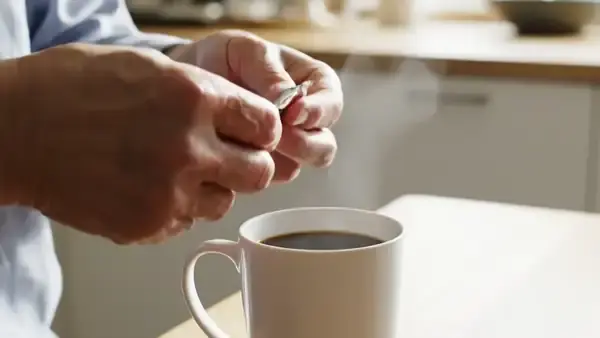
Kanna, Sceletium tortuosum, is a small succulent from the dry western parts of South Africa.
The Khoi and San peoples chewed its dried leaves and stems for centuries, on long journeys, against thirst and tiredness, and socially.
The extract in this packet is a standardized one sold under the Zembrin name, and it's a mild plant with a real effect on brain chemistry: it acts on the same chemistry some daily medicines act on, which is exactly why the seller's own label tells you to ask your clinician before combining it with anything.
So what does kanna do, in plain words?
In people, it has been measured once on thinking tasks, and that one measurement is the ground this page stands on.
Now the trial.
Twenty-one healthy adults, average age about 55, took 25 milligrams a day of the Zembrin extract or a placebo for three weeks each, in a crossover design, and were tested on a computerized battery.
On two of the battery's many scores, cognitive flexibility and executive function, the kanna weeks came out better than the placebo weeks, and the extract was well tolerated. [2]
Twenty-five milligrams is the dose in the packet.
So this is the one line on the panel at the dose of its trial.
And here's the honest size of that trial: 21 people, three weeks, two scores out of many, with the extract's maker among the authors.
A first study, not a track record.
The packet gives you the dose the study used, and the study is the size of a large dinner party.
Kanna at 25 milligrams is the dose of its only trial in people, and that trial had 21 of them for three weeks. It's the most interesting line on the panel and the one I'd want your clinician to know about.

Fifty Milligrams, and Three Trials That Used Three Hundred
The line with the best trials in people over 55, and a dose at a sixth of them.
Why does bacopa keep turning up in memory products?
Because it's one of the few herbs with more than one trial in healthy people over 55.
And those trials measured something you'd recognize: remembering a list of words.
Bacopa monnieri is a small creeping plant of wet ground in India, used there for centuries, and it's the one herb on this panel whose trials were done in people my age.
Fifty-four healthy adults aged 65 and older took 300 milligrams a day of a standardized extract, or a placebo, for twelve weeks, and the bacopa group did better on delayed word recall. [3]
Ninety-eight healthy adults over 55 took the same 300 milligrams for twelve weeks, and the bacopa group did better on verbal learning and retention. [4]
A 2014 meta-analysis pooled nine trials of standardized extracts, 518 people, taken for at least twelve weeks, and found faster performance on two measures of attention and processing. [5]
Three hundred milligrams, of a standardized extract, for twelve weeks.
The packet holds 50 milligrams of an extract whose strength isn't printed.
A sixth of the trial dose.
Six packets a day would get you there, at about twelve dollars a day, which nobody is going to do.
Bacopa is the line with the best trials on this panel and the smallest fraction of its trial dose. At 50 milligrams it's a name on the label, not the herb of the studies.
One Hundred Milligrams of a Root Studied in Clinicians on Night Duty
The first line on the panel, and the trial least like your morning.
So is rhodiola a memory herb?
Not on this evidence, and I'd rather say so now.
Its best-known trial measured tired people at the end of a night shift.
Rhodiola rosea is a root from cold mountains and the Arctic, with a rose smell when you cut it.
Its best-known trial gave 56 healthy young clinicians on night duty one tablet a day of a standardized extract called SHR-5, or a placebo, for two weeks each, and measured them at the end of the shift.
The rhodiola group did better on a set of tests of attention, short-term memory and speed than the placebo group, during the first two weeks. [6]
Young clinicians, at the end of a night shift, after two weeks.
The packet holds 100 milligrams of an extract, and the trial extract was a standardized one with a name.
I'm not a young clinician and my coffee isn't a night shift.
The trial says what rhodiola did for tired people under pressure, and nothing about a man at his own table at seven.
Rhodiola: one real trial, in the wrong people at the wrong hour for most of us. It's a tiredness result, not a memory result.

Sixty Milligrams of Phosphatidylcholine, and Fifty Micrograms of Huperzine A
Two small lines, one of them a food and one of them the reason to talk to a pharmacist.
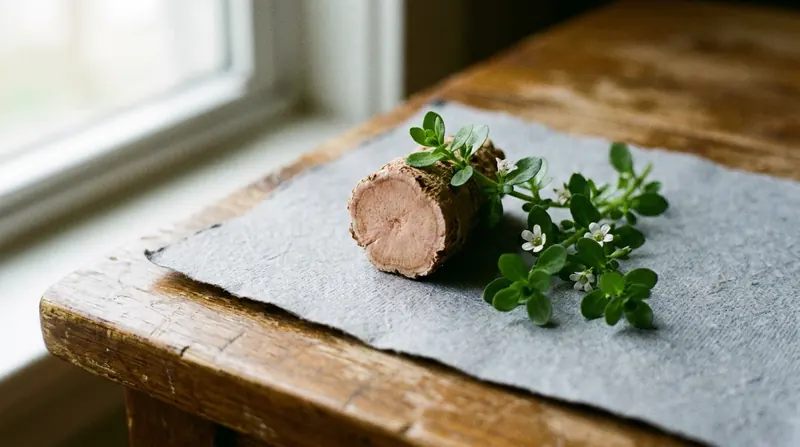
Phosphatidylcholine, 60 milligrams, is the main fat-and-choline molecule of cell membranes and of lecithin, the emulsifier in egg yolk and sunflower seeds.
Only about 13 percent of it by weight is choline, so the packet delivers roughly 8 milligrams of choline, against a Daily Value of 550. [7]
The best evidence for choline and memory is a cohort, not a trial: in the Framingham Offspring study, 1,391 adults aged 36 to 83 who ate more choline scored better on verbal and visual memory tests. [8]
That's people eating eggs, milk, meat and beans over years.
Eight milligrams is what's in a bite of egg.
Huperzine A, 50 micrograms, is a compound from a Chinese club moss that acts on the same enzyme some medicines act on, which is why supplement makers like it.
In healthy adults, twelve per group, single doses of 100 or 200 micrograms inhibited the enzyme in their red blood cells; the 200-microgram dose kept declarative recall steady across the day's sessions, but neither dose improved overall performance. [9]
The packet holds 50, a quarter of the larger dose that didn't do much.
Eight milligrams of choline from a fat you'd get in a bite of egg, and a quarter of a huperzine dose that inhibited an enzyme without improving performance. Two small lines, and the moss is the one to mention at the pharmacy counter.
Count the lines that meet their trial at their own dose, in people your age, and you get one: the kanna, in a trial of 21.
Bacopa is at a sixth.
Rhodiola's trial was a night shift.
The choline is a bite of egg, and the moss is a quarter of a dose that didn't work.
Almond, Coconut, Three Sugars and the Word on the Front
The part of the packet you'll actually taste, and the part that decides whether you'll keep taking it.

Most of the packet by weight is the carrier: glycerin, water, almond butter, coconut nectar, cassava syrup and cocoa extract.
That's why it tastes like a thin, sweet, slightly spiced chocolate spread, and why the panel prints "contains almond and coconut" in bold.
If you can't eat almonds, this isn't for you, whatever the five lines say.
The sugar is small, less than a gram added per packet, from the nectar and the syrup, and the seller keeps it under twenty calories.
The reviews divide on the taste: most like it, a few call it far too sweet, and one calls it chemical.
"Liposomal" is a manufacturing word, not a result.
It means the actives are carried in fat droplets.
The seller says that helps absorption and cites nothing; I'd read it as a texture, not a claim.
A sweet almond-and-coconut paste with a cocoa note, under twenty calories, and two allergens in bold. The carrier is most of what you're paying for by weight, and it's the reason a capsule would have been cheaper.
How to Read the Back of This Box in Two Minutes
You don't need me to read a supplement panel for you.
You need four questions, and you can ask them of any box on any shelf.
Question one: is there an amount beside every name?
On this box, yes, and that's rarer than it should be.
Plenty of products print a "proprietary blend" with one total and no breakdown.
You can't compare a blend with a study, because you can't tell what's in it.
Here every line has its own number: 100, 60, 50, 25 milligrams, and 50 micrograms.
That alone puts this packet ahead of a lot of the shelf.
Question two: does the amount match the studies?
Set each number beside the dose the researchers used, and you get this page in one line.
Kanna matches.
Bacopa is a sixth, rhodiola comes from a different kind of study, and the moss is a quarter of a dose that didn't do much.
Question three: what's the rest of the spoonful?
Here it's almond butter, coconut nectar, cassava syrup, cocoa and spices, and that's most of what you're swallowing.
It's why the packet tastes good to most people.
It's also why anyone who can't eat almonds or coconut should stop reading at this line.
Question four: who's behind it, and can you reach them?
Cymbiotika, LLC, with an office on Oberlin Drive in San Diego, a toll-free number, an email and a chat on its site.
A company you can phone on a Tuesday is a company you can ask about a refund.
That matters more than anything printed on the front.
An amount for every line, one line at its trial dose, a sweet carrier with two allergens, and a real address. That's the back of the box in two minutes.
What Has Actually Been Studied, Line by Line
Let me lay the five lines side by side, the way you'd lay tools out on a workbench.
Not what the box hopes for, but what somebody actually measured.
So what's the honest word for all of that?
Studied, in small groups, and mostly at other doses.
The kanna is the one line where the packet and its study meet.
If you want to know which line your notebook is really watching, the study points at that one.
Does any of this mean the packet will sharpen my memory?
Nobody can tell you that, and nobody has tested the packet itself.
What you can say is narrower, and more useful.
You'd be taking one plant at the dose of its one trial, beside four smaller lines, in a spoonful most people enjoy.
That's the benefit at its true size: a studied dose of one plant, in a habit that takes two seconds.
And what about the word "liposomal" on the front?
Read it as a description of the texture, a paste of fat droplets, and not as a result.
The seller says it helps absorption.
It cites no study for that, so this page leaves it where it found it.
A Normal Tuesday, With One Packet in It
Here's what the thing looks like in a real week, because a label is only half of the story.
Picture an ordinary Tuesday.
Seven o'clock.
The coffee's made the way it's always made, in the same mug.
You tear the corner off a packet, squeeze the paste in, and stir.
The coffee goes a shade lighter and smells faintly of cocoa and cinnamon.

That's the whole ritual.
It takes less time than finding your reading glasses.
Eight thirty.
You write one line in a small notebook: what's on the day, and nothing about how sharp you feel.
Why not how sharp you feel?
Because "sharp" changes with the weather, and "called the insurance office and had the policy number ready" doesn't.
Mid-morning.
You walk, run the errands, and see whoever you see.

Maybe you meet a friend by the ball field, and the name of a pitcher from 1971 comes up.
Maybe it comes to you, maybe it comes to him, maybe it comes to neither of you and you both laugh.
None of that is a test of the packet.
It's a Tuesday, and you should have one like it either way.
Evening.
You look at the morning's line and add a few words about how the day actually went.
Thirty of those lines is a month.
And a month of your own lines tells you more than any review, mine included.
That's it.
No timer, no chart, and no second packet in the afternoon.
One packet, one cup, one line a day.
Your First Thirty Days, Week by Week
If you do try it, it helps to know what a fair month looks like before you start.
Not what to feel, which nobody can tell you, but what to do and when to look.
Week one: getting the habit to stick.
The only goal is the same cup at the same hour, seven mornings in a row.
Most people who drop a new habit drop it in the first week, and usually on a Saturday.
So put the box right next to the coffee maker, where you can't miss it.
Your notebook lines this week will be short and a little awkward.
That's fine, because you're building the record, not reading it yet.
Week two: leave everything else alone.
Same coffee, same walk, same bedtime, and no new supplements on top of this one.
If you change three things at once, you'll never know which one your notebook is describing.
One change at a time is the only way a month teaches you anything.
Week three: the kanna trial's length.
Three weeks is how long each side of that small crossover study ran. [2]
It's a reasonable point to glance back over the lines, without deciding anything yet.
Are your ten o'clock notes about the same, or do they read a little differently?
Week four: read the month out loud.
On day thirty, sit down with the notebook and read all thirty lines in one go.
Better yet, read them to your wife, or to the friend on the bench.
Someone who sees you every day is a fairer judge than a feeling on a Tuesday.
Then decide, slowly and on paper.
If the month reads better than the month before, you've found a two-dollar habit worth a second box.
If it doesn't, the seller's promise on a first product lets you ask for your money back within sixty days.
Either way, you'll have decided from your own record, not from a review or from me.
Week one for the habit, week two for keeping everything else still, week three for a glance, week four for the verdict.
If You Do Buy It: One Box, a Clinician's Word First, the Same Cup, One Notebook
If you're going to spend the money, spend it as a test with a date on it, and clear it before day one.
- Ask your clinician or pharmacist before the first packet, and name the kanna and the huperzine A. The label says to; this page says it twice.
- Buy one box, not a subscription. A month is the test, and the sixty-day promise covers one product, once.
- One packet in the same cup at the same hour every morning. The kanna trial ran three weeks; a packet on the days you remember won't test it.
- Keep the coffee exactly as it was. The packet has no caffeine of its own, so nothing about your morning should change but the color of the cup.
- Write one line a day in a notebook. Not "sharper" or "foggier." What you were doing at ten, and how it went.
- On day thirty, read the thirty lines. If they read better than the month before, you've found a two-dollar habit and can ask for the second box. If they don't, the promise page says you can ask for the money back without sending anything.
Look at that list the way I do.
Four of the six things cost nothing.
The box is the one you'll pay for, and the clinician's word and the notebook are the ones that will do the work.

Four Fair Objections, and Straight Answers
If you've read this far, you've got objections.
Good, because so did I.
"Two dollars a day is a lot for a teaspoon."
It is, and I won't pretend otherwise.
A month's box costs about what a modest dinner for two costs.
The subscription takes a little off, and the label is the same either way.
Here's the fair way to look at it.
You're paying for one plant extract at its trial dose, four smaller lines, and a sweet carrier that makes up most of the weight.
If that's worth one dinner out to you, for one month, as a test, fine.
If it isn't, keep the money and keep the walk, and you haven't lost a thing.
"I don't like sweet things."
Then read the one-star review before you order anything.
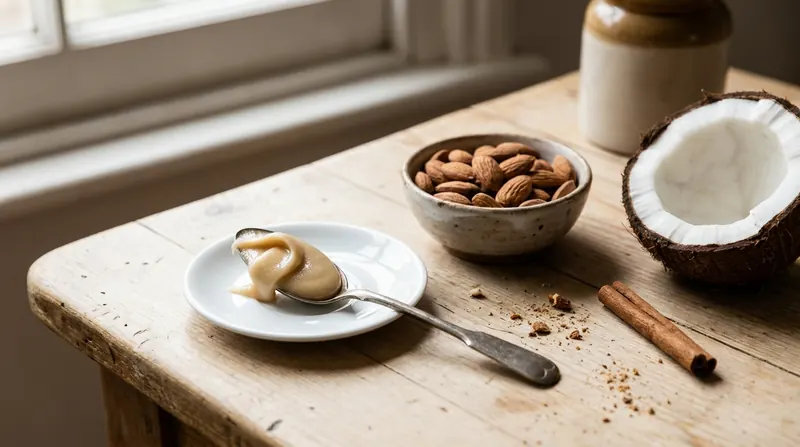
The paste is almond butter, coconut nectar and cassava syrup, with cocoa and warm spices.
Most reviewers like it, and one called it disgustingly sweet in capital letters.
Stirred into black coffee, the sweetness softens, and the seller suggests exactly that.
But if you can't stand a sweet coffee either, this simply isn't your format.

"How long before I'd know anything?"
Honestly, maybe never, and that's the right answer to plan around.
The kanna trial ran three weeks on each side of the crossover.
The bacopa trials ran twelve weeks, at six times this dose.
So a month is the shortest fair test, and the sixty-day refund leaves room to read the notebook before you decide.
Give it thirty days, read the lines, and decide with them open on the table.
"I already take something every morning."
Then this is the objection that matters most.
Kanna and huperzine A both act on brain chemistry that some daily medicines act on too.
Put the box in a bag with everything else you take, and let the pharmacist look before the first packet.
Price, taste, time and what you already take: four honest reasons to wait, and each one has a plain answer.
Six Things a Packet Won't Do
- It won't give you the bacopa of the trials. Fifty milligrams is a sixth of the 300 that three twelve-week trials in people over 55 used.
- It won't give you more than one line at its trial dose, and that trial had 21 people in it for three weeks.
- It won't suit anyone who can't eat almonds or coconut. Both are printed in bold on the panel.
- It won't act on any condition a clinician has named. It's a dietary supplement, and its own listing carries the sentence that says so.
- It isn't something to add to a daily medicine without asking. Kanna and huperzine A both act on brain chemistry; the label itself says to ask.
- It won't be refunded twice. The seller's sixty-day promise is for your first product, once per household, and it excludes international orders.
If that list annoys you, I'd rather you were annoyed now than when the box arrives from San Diego.
Who It Suits, and Who It Doesn't
This is worth a look if:
- You want the one kanna dose that has a trial behind it, and you've read how big that trial was.
- You'd rather take a spoonful of paste in your coffee than a capsule, and you like sweet things.
- You want a company with a street address in San Diego, a toll-free number, an email and shipping at no charge. You have all four now.
- You can hold two ideas at once: five real lines, one at its trial dose, and a trial of 21 people.
- You'll ask your clinician first, and run one box as a thirty-day test with a notebook.
Give it a miss if:
- You can't eat almonds or coconut. They're the paste.
- You want bacopa at its trial dose. Fifty milligrams is a sixth of it.
- You want something that acts on a condition a clinician has named. This is a dietary supplement.
- You take anything daily and haven't asked a pharmacist about kanna and huperzine A. Ask first.
- You've already used the seller's promise on another product. It's once per household.
From San Diego, With Shipping at No Charge and a Refund You Get Once
The packet is sold by Cymbiotika on its own website, and that's the only place this page links to.

The company is easy to find.
Cymbiotika, LLC, with its office on Oberlin Drive in San Diego printed in its terms, a toll-free number that answers on weekdays, an email, and a chat on the site.
The listing says each batch is tested by an independent lab for contaminants and heavy metals, which is more than most say.
The current price is shown on its page, not here.
The day I read it, a box of a month cost about what a modest dinner for two costs, and the subscription price was a little lower.
Buy one box.
A month is a test.
A subscription to something you haven't tasted is a bet, and one reviewer couldn't finish the spoonful.
Now the two things that matter more than the price.
First, shipping.
Cymbiotika ships at no charge within the United States on every order, the seller's page says, and ships abroad to most countries at a cost, with a few excluded.
Second, the refund policy.
Read this twice.
If you're not satisfied with your first Cymbiotika product, you can ask for a refund within 60 days of purchase, no questions asked, and you don't send anything back.
It applies to one product per customer and per household, once.
In a bundle, only one product qualifies.
International orders don't qualify at all.
It's only for purchases on the seller's own site.
It's a real refund with a real address and nothing to ship back, and it's a one-time offer.
I'd rather say so than call it a refund with no strings.
One month of teaspoon packets, from San Diego
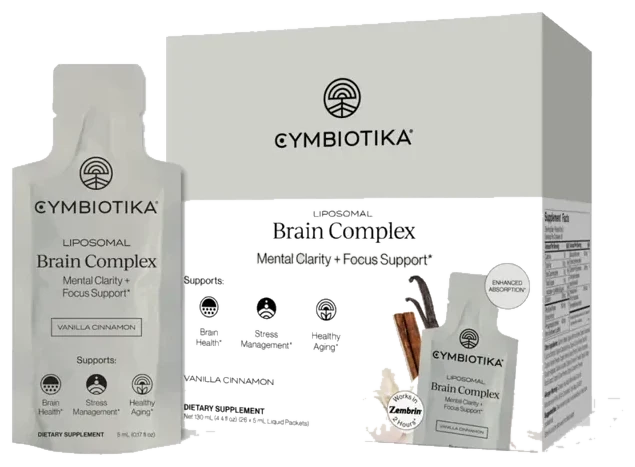
A five-milliliter packet of almond-and-coconut paste with five botanical lines, from a San Diego company, squeezed into the mouth or stirred into coffee once a day.
CHECK AVAILABILITYSold and shipped at no charge within the United States by Cymbiotika, LLC, San Diego, California · Contains almond and coconut · Refund within 60 days on your first Cymbiotika product, once per household, with nothing to send back; not for international orders
Fifteen Hundred Reviews, a 4.9 Average, and the Two Bad Ones I Kept
The seller's page shows 1,563 reviews with an average close to five stars, and the seller's review system marks most of them as confirmed buyers.
I read the thirty most recent and kept seven, including a three-star and a one-star, because a page that shows you only the five-star reviews of a two-dollar packet is selling, not reporting.
I threw out several that talk about feelings this page makes no claim about, because this page makes no claim about any of those and won't borrow one from a customer.
I threw out one that describes a medical procedure, one that describes a reaction while taking it with a second product, and one that compares it with a discontinued formula.
These are real customers, quoted word for word from the seller's product page; the small photos beside them are illustrations, not the reviewers.

I've been taking this for a few months, I always give it a good 3 months before discontinuing something to get a true reading on the product & I truly feel more clear headed & less foggy during my day. I am going to stick with it!

My husband has been taking Brain Complex for almost a month. I see a difference in his cognition. He says he likes the taste and I like the results.

I haven't feel or seen any result so far, I like the taste though. Shipping is expensive.

DISGUSTINGLY SWEET. Do not bother
Read those the way I did.
Jamie gives everything three months before judging, which is the right length for the bacopa trials and longer than the kanna trial, and says her days are clearer.
That's the best-shaped review on the page.
Vicki is describing her husband, a month in, and says he likes the taste.
That's a wife's observation, and I'd weigh it as one.
Daryl, at three stars, feels nothing, likes the taste and objects to the shipping, which the seller's page says costs nothing; his complaint may predate that.
Dorit, at one star, couldn't get past the sweetness.
If you dislike sweet things, she's the review to read.
Nobody I kept describes their memory coming back.
One describes three months, one describes a husband, one describes nothing, and one describes a spoonful she couldn't finish.
That's what five lines in a sweet paste look like from the customer's side of the counter.
What Readers Ask Me Before Their First Box
Questions readers ask
Is this medicine?
No. It's a dietary supplement: five botanical lines in a sweet almond-and-coconut paste, one packet a day.
Does it have caffeine?
None of its own. If you stir it into coffee, the caffeine is the coffee's.
What is kanna?
A small South African succulent, here as a standardized extract at 25 milligrams. That's the dose of its one trial: 21 healthy adults, three weeks each way.
Which of the five lines does the most?
The kanna is the only line at the dose of its trial. The others sit below their trials or were studied in other people.
What does it taste like?
Like a thin, sweet chocolate-almond spread with a little spice. Most reviewers like it; one couldn't finish it.
Will it help my memory?
Nobody can promise that, and nobody has tested the packet itself. A month with a notebook is the honest way to find out for yourself.
Can I take it alongside what I already take?
Ask your pharmacist first and name the kanna and the huperzine A. The seller's own label says to check with your clinician.
I'm allergic to nuts. Can I take it?
No. Almond butter is most of the paste, and the panel prints "contains almond and coconut" in bold.
Does it ship to me?
At no charge anywhere in the United States, the seller says. Abroad at a cost, with a few countries excluded.
What if it arrives and I don't like it?
On your first Cymbiotika product, ask for a refund within 60 days and keep the box. It's once per household and not for international orders.
Everything Above, in Sixty Seconds
- A month of five-milliliter packets from Cymbiotika of San Diego: rhodiola 100 milligrams, phosphatidylcholine 60, bacopa 50, a standardized kanna extract 25 and huperzine A 50 micrograms, in a sweet almond-and-coconut paste with under a gram of added sugar and twenty calories. Contains almond and coconut. No caffeine.
- Kanna: the dose of its one trial, 21 healthy adults of about 55, three weeks, two scores better. [2] Bacopa: a sixth of the 300 milligrams of the trials in adults over 55. [3] [4] [5] Rhodiola: a trial in young clinicians on night duty. [6] Choline: a bite of egg's worth. [8] Huperzine A: a quarter of a dose that didn't improve performance. [9]
- Fifteen hundred reviews, average 4.9; the four I kept say "three months," "my husband," "nothing so far," and "too sweet."
- Ships at no charge within the United States; refund within 60 days on your first product, once per household, nothing to send back.
- The honest use: a clinician's word first, one box, the same cup at the same hour for thirty days, and a notebook.
What a Packet Is Actually Worth
Here's the whole thing in one breath.
Five real lines in a well-labeled packet, from a company that prints every one of them and tests its batches.
One line at its trial dose, from a trial of 21 people.
Three lines below their trials or beside a trial in other people, and one at a quarter of a dose that did nothing.
A sweet paste of almond and coconut that most people like and one woman couldn't swallow.
And a refund that's real, generous, and yours once.
If you're a man who wants the one kanna dose with a trial behind it, in a spoonful he'll actually take, with his clinician's word first and a notebook beside the cup, that's worth one box.
Not because of the front of the packet.
Because you'll know exactly what's in the teaspoon, and how small the study behind it was.
Ask your clinician, buy one box, put the packet in the same cup at the same hour, and write one line a day for thirty days. The notebook is a better judge than I am.
Cymbiotika, LLC · San Diego, California · Contains almond and coconut · First product refundable within 60 days, once per household
P.S. If you take one thing from this page, take the two numbers.
Twenty-five milligrams of kanna, the dose of its only trial.
Twenty-one people in that trial.
Everything else about this packet sits between those two.
P.P.S. If the afternoon fog has been with you for a year, and it's there before the coffee too, talk to your own clinician before you buy anything.
A packet in the morning cup is a small habit.
It was never going to answer a question a clinician answers in fifteen minutes and a blood test.
P.P.P.S. And if you do order it, keep the notebook, and keep the coffee exactly as it was.
When the box is empty, you'll have thirty lines about your own mornings, and that's worth more than the box, whichever way the lines turn out.
The ingredient and advertising guide linked at the foot of this page goes through every one of the five lines and the paste, at the doses printed on the panel.
Print it and take it to the pharmacist if you take anything daily; it's written for exactly that.